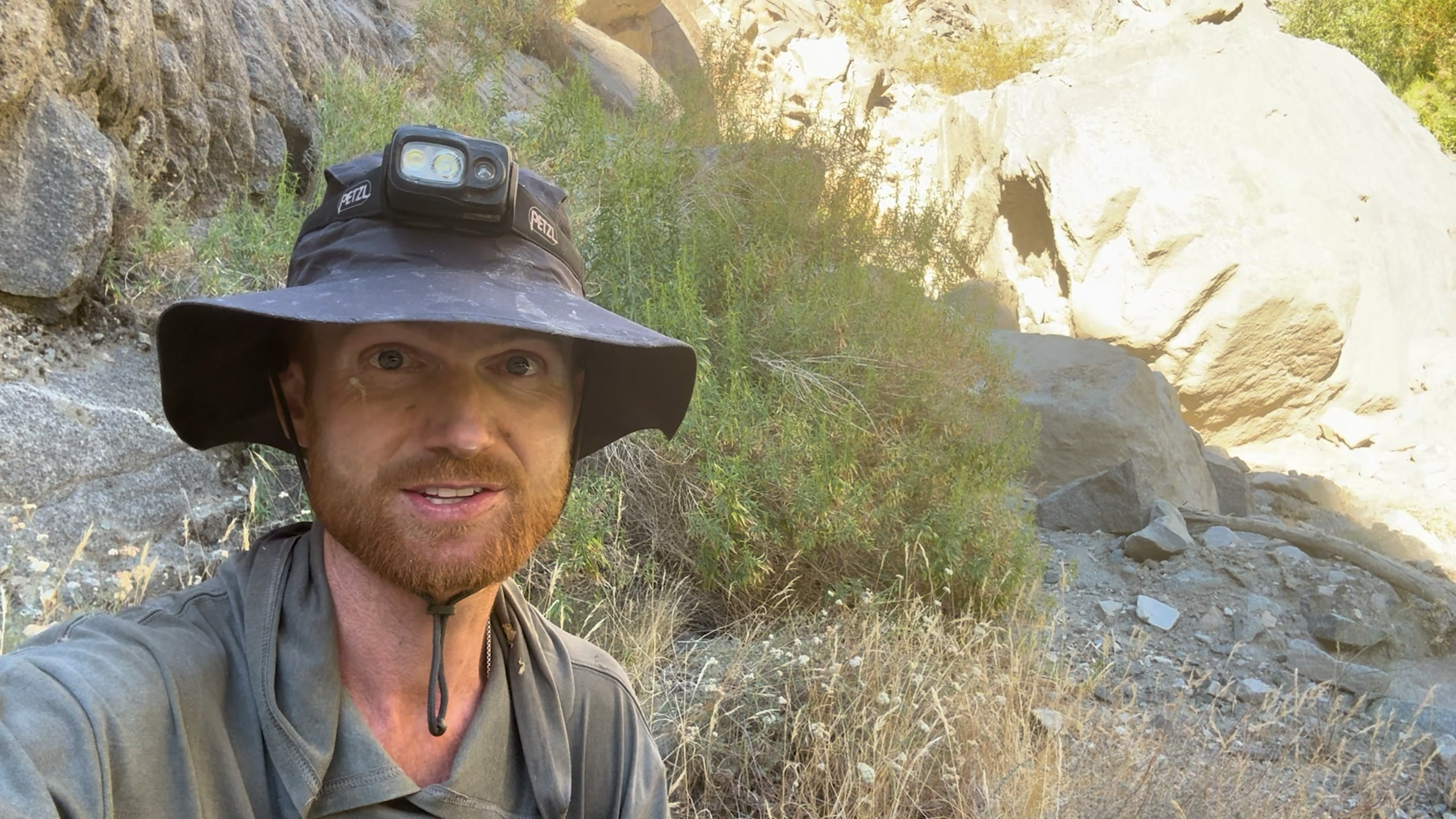
They tell a lot of stories in the old west.
Most of them, when you run them down, turn out to be just that: stories. Whispers and legends, lies and dreams, tropes and tricks of memory dressed up as history. As the caretaker of an old mining town, I’ve heard most of them by now, many more than once – often beat for beat, just with the names and the county changed.
The prospector who stumbled onto a rich vein while chasing a straying mule, stuffed his saddlebags with ore, and died before he could file the claim. The miner who worked a tunnel for years, grew bitter, lit one final round of dynamite, and walked away without waiting to see what it revealed – only for the next man to find the face glittering with gold. The forty-niner sent to dig beneath a shady tree as a joke, who struck a five-thousand-dollar pocket and never worked another day in his life.
Good stories. Some of them happened, probably, in some form, to someone. But you can usually tell which ones have been passed around too long, because the details land too neatly. Real life has a different texture – messier and stranger, and the pieces don’t fit together in a way that makes obvious sense.
Which is part of the reason why, when I first heard of the Beekeeper of McElvoy Canyon, I paid attention.
This one didn’t have the shape of a legend. There was no buried gold, no dramatic ending, no moral you could pin to the wall. Just a man who walked into one of the most inaccessible canyons in California, built himself a stone cabin on a cliff face, strung rope ladders beside 150-foot waterfalls, hauled pot-bellied stoves over 11,000-foot ridgelines, and then, for reasons that still aren’t entirely clear, kept bees. Twenty miles from the nearest road, in a desert that kills more things than it feeds, for nearly twenty years.
The craziest part? Every word of it is true – and the parts no one wrote down are stranger still.
I know, because I went looking. Not just into the mineshaft where I first found his things, but across the entire route he carved for himself – over the ridgelines, down the waterfalls, through the abandoned workings he turned into shelter. I traced his military records. Read the cassette transcripts. Spoke with the few people still alive who remembered him. Then I carried what he carried and climbed where he climbed, to see what the canyon would allow.
Fragments of Marion Howard exist in old articles and trail notes. But no one had ever assembled the full account – the war, the factory floor, the ladders, the bees, the faith, the failures – and then tested it against the landscape itself.
This is that attempt.
What I Found
I had heard the rumors before I ever set foot on the trail.
Somewhere along the Lonesome Miner’s, people said, there was a mineshaft that hadn’t been reclaimed. It belonged to a man who had lived alone in McElvoy Canyon for years – a beekeeper, of all things. I didn’t know exactly where it was. I didn’t know how much of it was true. In the West, stories tend to drift.
I didn’t expect to find anything intact.
Two days into one of the hardest hikes of my life, I did.
The Lonesome Miner’s Trail is a brutal forty-mile route through the Inyo Mountains, assembled by BLM volunteers in the late 1980s and 1990s from fragments of 1800s mining paths – and named by Wendell Moyer, the mountaineer who first explored its most remote sections. As it crosses five canyons it gains and loses roughly 25,000 feet of elevation. The logbooks along the way sometimes show no visitors for years at a stretch. After two sixteen-hour days I was starting to understand why. I could barely feel my legs. Whatever water I had left tasted like a nickel. Every step was a negotiation with the part of my brain that wanted to stop.
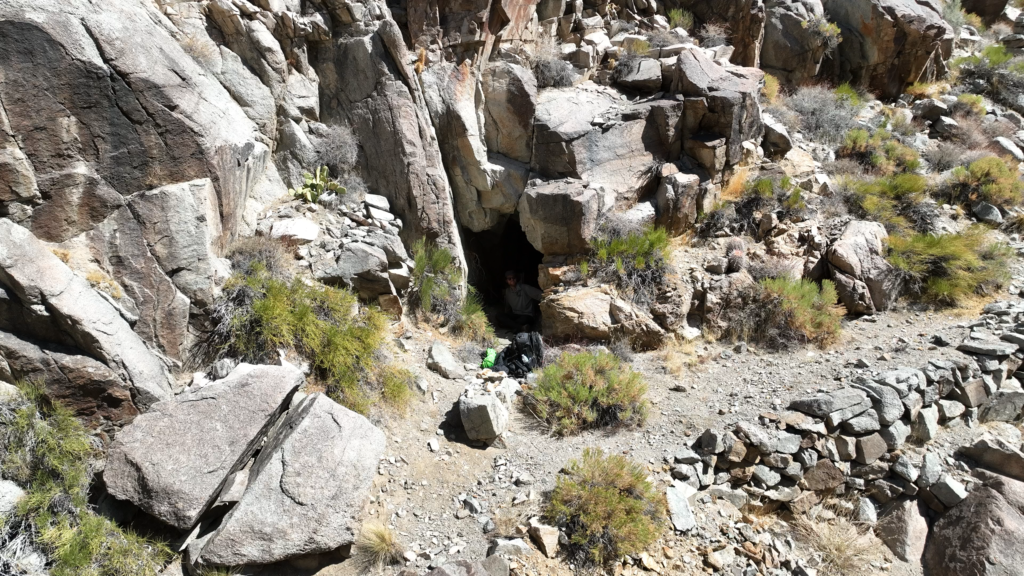
But as I limped toward the sound of water at the bottom of McElvoy Canyon, I noticed a dark cut in the rock. A shadow, I thought. But the corners were too clean, too deliberate.
A mineshaft. Not collapsed, not sealed, not abandoned in the way they normally are. Boots just inside the entrance – cracked and stiff, but placed there, not dropped. Three hammers on nails in the wall, arranged by size, as if someone expected to pick them up again shortly.
Then, stranger than all of it: beekeeping gear. A veil. Wooden frames. A smoker, its bellows long deflated. Honeycomb frames propped against the wall, wax flaked to dust. And sitting in the corner, a small jar of honey – glass clouded, contents crystallized – sweetness where nothing sweet should exist.
Underneath the beekeeping helmet, at the bottom of a wooden box beside a straw bed, was a 1974 issue of Awake! magazine. The cover headline read:
YOU, TOO, CAN BECOME FREE.
I stood in the dark and read it twice.
That moment sent me down a two-year road. Who really was Marion Howard? What drove him out here? Why bees, in a place like this? What was he preparing for, or running from, or building toward? Why do I feel such a pull to this story? The mineshaft raised every question and answered none of them. To find the answers I had to find the man – and to find the man, I had to understand where he came from.
The Man
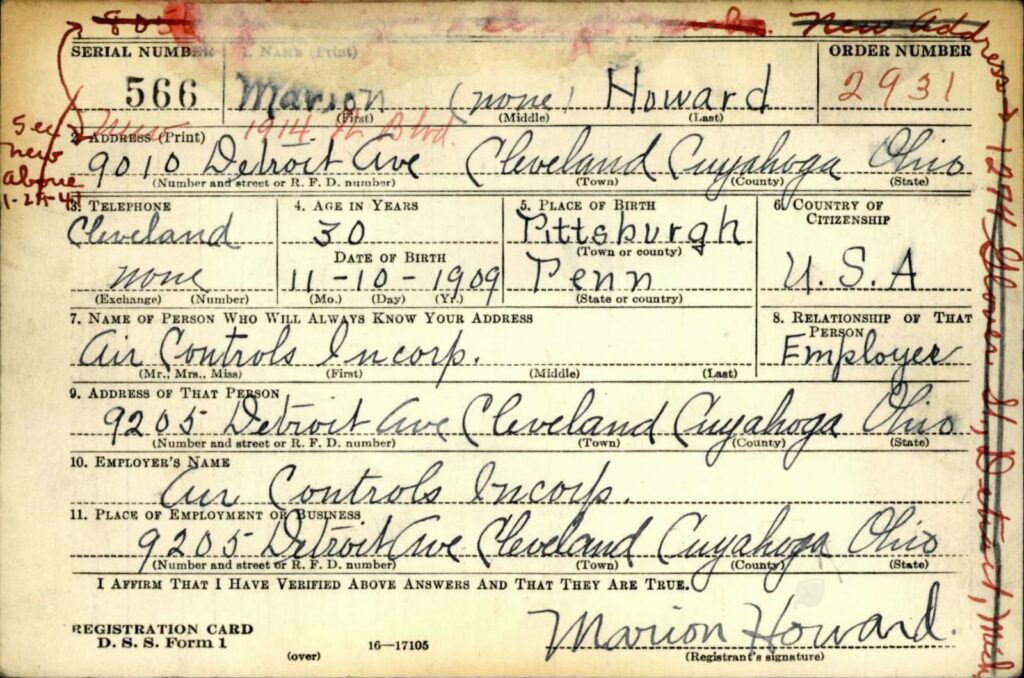
Marion Charles Howard was born November 10, 1909, in Allegheny County, Pennsylvania. By most measures, his early life was unremarkable.
Then came the war.
Marion was drafted into the U.S. Army and assigned to the 711th Railway Operating Battalion. He didn’t go to the Pacific. He didn’t go to Europe. The Army sent him to Iran, where for twenty-eight months he maintained the Trans-Iranian Railway – the vital supply line that kept oil and materiel flowing north to the Soviet front.
On paper it was logistics work. In practice, it was a front-row education in how power actually operates. Marion watched American advisors drilling the Shah’s soldiers. He saw how the local population was treated, how decisions got made, how the whole machinery of empire moved when it thought no one was watching.
He came home changed.
He tried to slip back into ordinary life. Got a job at the Chrysler plant in Detroit, one man among thousands on the factory floor. But to Marion it felt like another draft. Another system of foremen and timecards and eyes tracking his every movement.
“I said to one guy, funny thing,” Marion recalled years later, his voice preserved on a cassette tape recorded by Moyer in 1987. “I walk over to Bragg’s body and I say, time goes real fast. But here at Chrysler, time just drags. Can you account for that? He thinks for a while and says, that’s easy — it’s the foreman system. I tell him, hell, I don’t pay no heed to them foremen. He says, don’t matter. You don’t have to. You can feel their eyes on you just the same.”
The eyes. That was what he couldn’t shake. He lasted a few years at Chrysler. Then he left.
Through the late 1950s and early 1960s Marion developed a migratory rhythm – wintering in California’s Owens Valley, spending summers picking fruit in Oregon, never staying anywhere long enough to feel cornered. He never married. By most accounts, he preferred it that way.
Then, sometime in the mid-1960s, he found the Inyo Mountains. And in the Inyos, he found McElvoy Canyon.
The Canyon
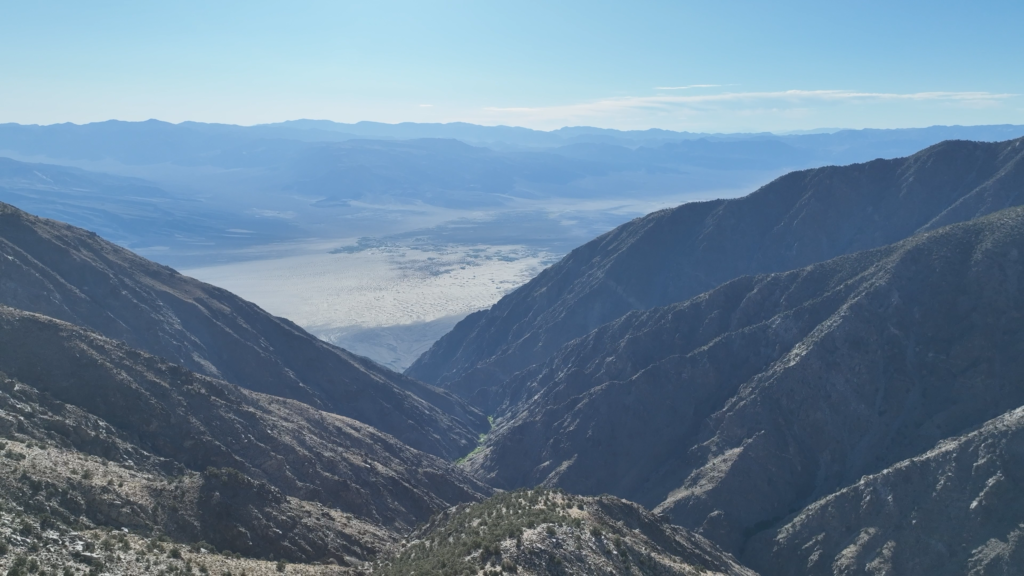
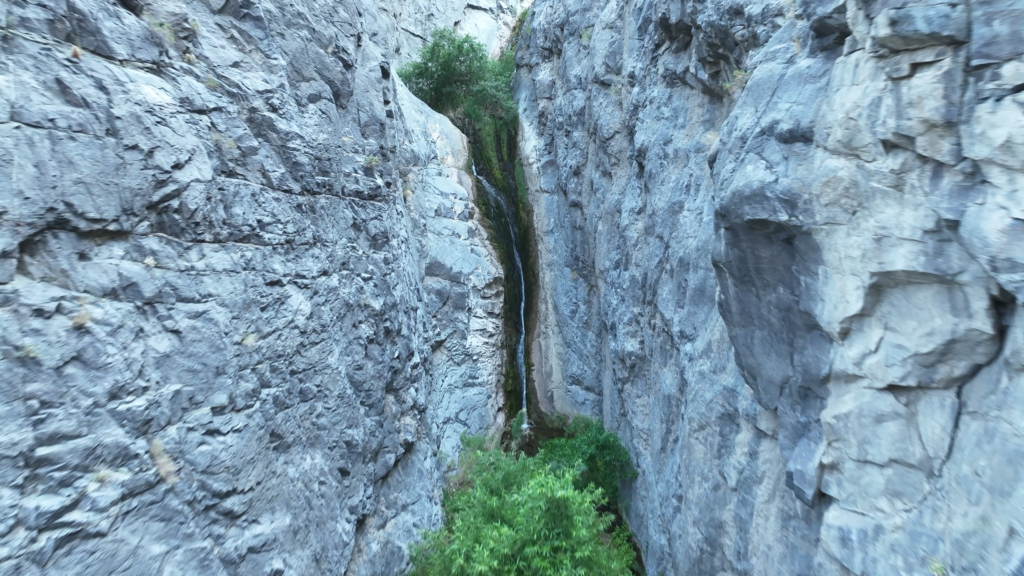
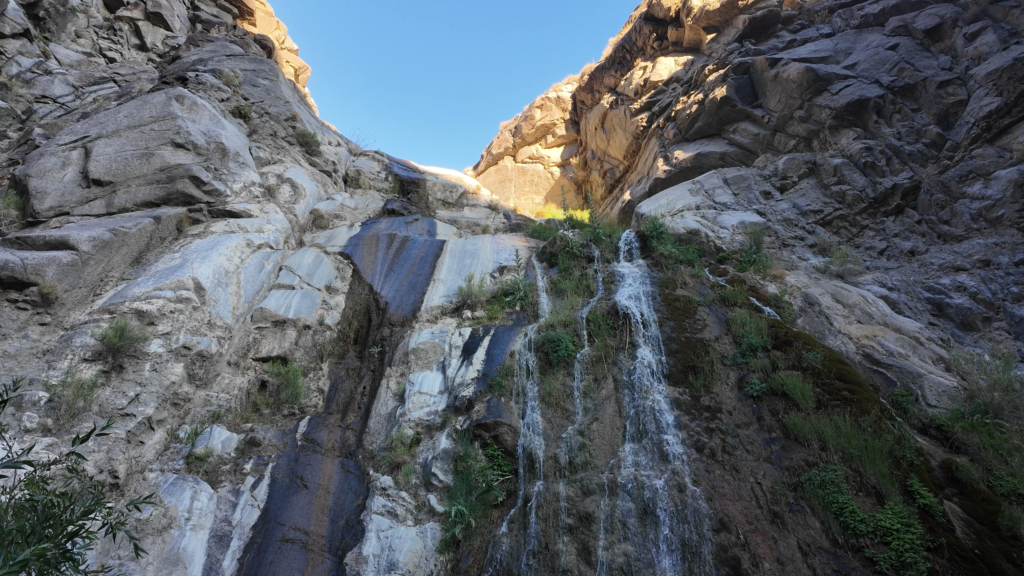
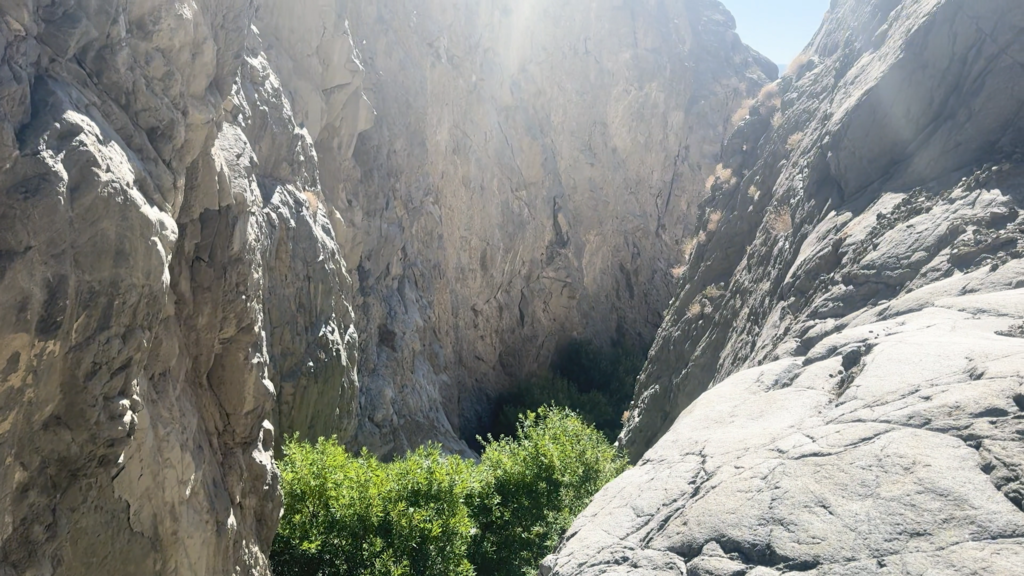
McElvoy Canyon was once described by an 1800s newspaper as “so nearly vertical as to be inaccessible to anything without wings.” No roads lead to it. Few maps show the way. The waterfalls drop hundreds of feet. The brush is choked with thorns. The cliffs are so steep the sun barely touches the floor.
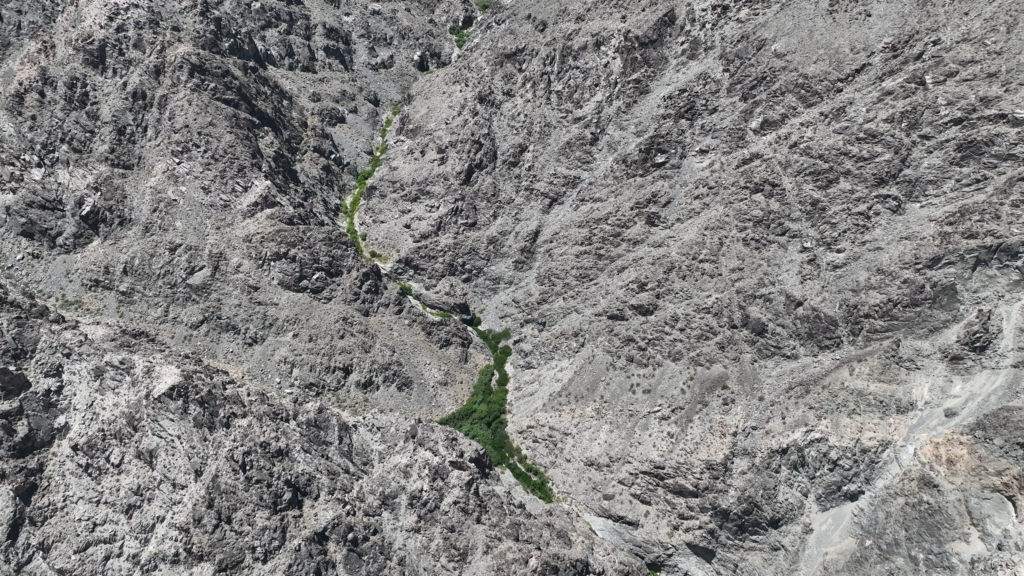
The canyon sits in one of the emptiest corners of the American West, wedged between the Owens Valley and Saline Valley, accessible – if that word even applies – only by climbing over an 11,000-foot ridgeline and descending roughly 10,000 feet into a slot that narrows until the only way out is through. The canyon floor has no trail. It barely has a rumor of one. Most years, it sees no human visitors at all.
It was into this place that Marion Howard disappeared sometime in the mid-1960s, and lived, largely alone, for the better part of two decades.
What He Built
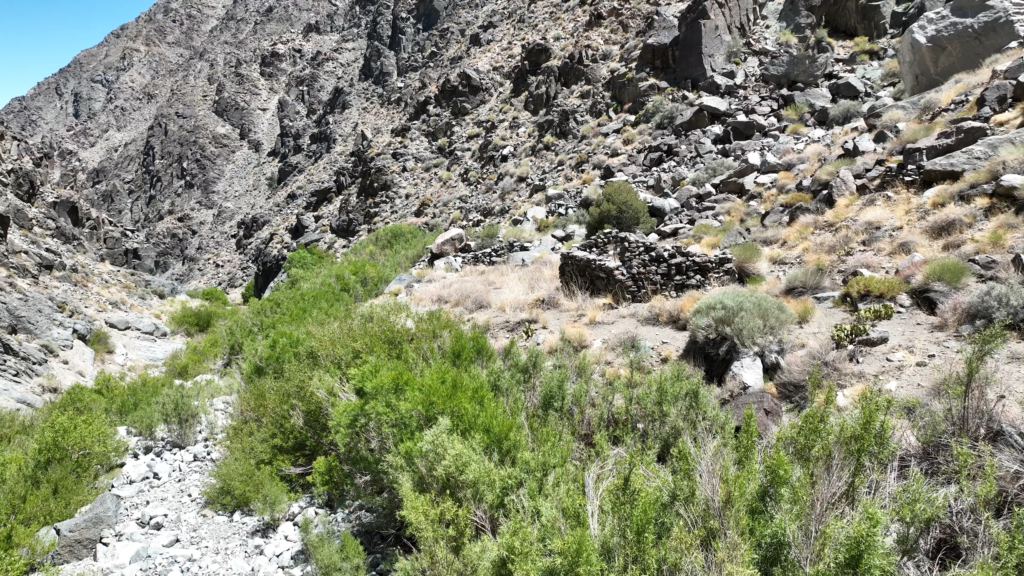
Over the next several years, Marion turned McElvoy Canyon into something that shouldn’t have been possible for one person working alone.
He started with the mineshafts – clearing them out, converting abandoned workings into waypoints and shelters. He hung his hammers on nails driven into the rock wall, arranged smallest to largest, with the same deliberate order he’d learned in the Army and never entirely shed.
Then he started building. A stone cabin first, fitted together from rocks that had no business being moved by a single man. Then a trail, hacked through brush so dense and thorned it had to be fought for yard by yard, down through the canyon, killing rattlesnakes along the way, lower and lower until the trail ran out at the waterfalls.
Then he built the ladders. In his journal he called them Jacob’s Ladders – a Biblical name, and the first hint that faith was part of what he’d carried into the canyon alongside the wire and the tools. Eight of them, one for each waterfall. The tallest ran over 150 feet. He constructed them from the top down, hand-carrying wire all the way from Lone Pine, lowering each ladder until it finally hit bottom. The work took years. There were close calls – once when a kinked wire strand snapped while he was halfway up the 150-foot ladder, dangling over the falls. Another time in winter he later described with characteristic understatement: he “shouldn’t of kicked that big icicle.”
At the canyon’s mouth he built another stone cabin – a staging point where he would later store honey for the long haul out.
Once the ladders were in and the brush cut back with hedge clippers, Marion could make the trip from the valley floor to his upper camp in half a day. He crossed from the Owens Valley side roughly once a week – more in summer, less in winter, but even in winter he came, tunneling through snowdrifts on pine boughs when the drifts grew too deep to walk.
He hauled pot-bellied stoves over the ridge – not one, but several – distributing them to his shelters the way other people stock cabins with blankets. In McElvoy, cold wasn’t discomfort. It was a fact that could kill you.
On the far side of all that effort, he set up his beehives.
The Bees
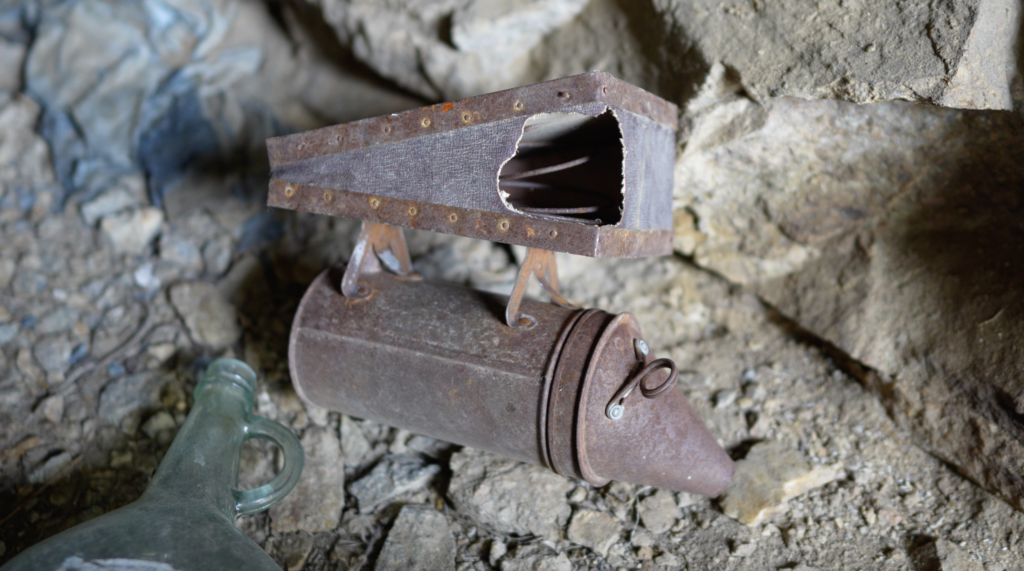
The bees are the strangest part.
Almost everything else about his life in the canyon has a certain internal logic, even if it’s extreme. The isolation makes sense if you understand what he was running from. The craftsmanship makes sense if you understand his character. The religious reading material, more on that in a moment, makes sense if you understand the era.
But the bees don’t.
At 6,800 feet, in a narrow canyon with minimal flowering plants, honeybees live a bad storm away from disaster. Spring comes late. Wildflowers bloom briefly before the heat kills them. Winters are long and brutal. And in the warmer desert below, wax moths – relentless hive parasites – can overrun a weakened colony in a single season.
Marion learned all of this, eventually. “The beekeeping wasn’t very good to begin with,” he admitted on Moyer’s tape. “I thought they’d just fly over and bring the honey back to me. I got over thinking that.”
And yet every spring he began again. Scraping wax. Cleaning frames. Hauling new cages of bees in over the same impossible ridgeline he’d crossed hundreds of times before. Setting them up on the same weathered wooden platforms, aligned to catch the first rays of sun that slipped between the canyon walls each morning.
Each hive could weigh close to a hundred pounds when heavy with comb. Opening one meant facing what amounted to a living storm – thousands of stingers, one smoker, and the knowledge that out here, twenty miles from the nearest road, a bad reaction wasn’t an inconvenience. It was a genuine problem.
He kept at it for nearly two decades anyway.
When Moyer finally tracked Marion down in 1994, he asked about the bees. Marion’s answer was simple: they’d been “done-in by wax moths.” Bad place, those Inyos, for wax moths.
The bluntness of that reply is what stays with me. Marion was not in that canyon because it was good for beekeeping. It was a terrible place for beekeeping. The odds were against him from the start. But he kept hauling them in anyway.
For nearly twenty years, he kept trying.
The Magazine
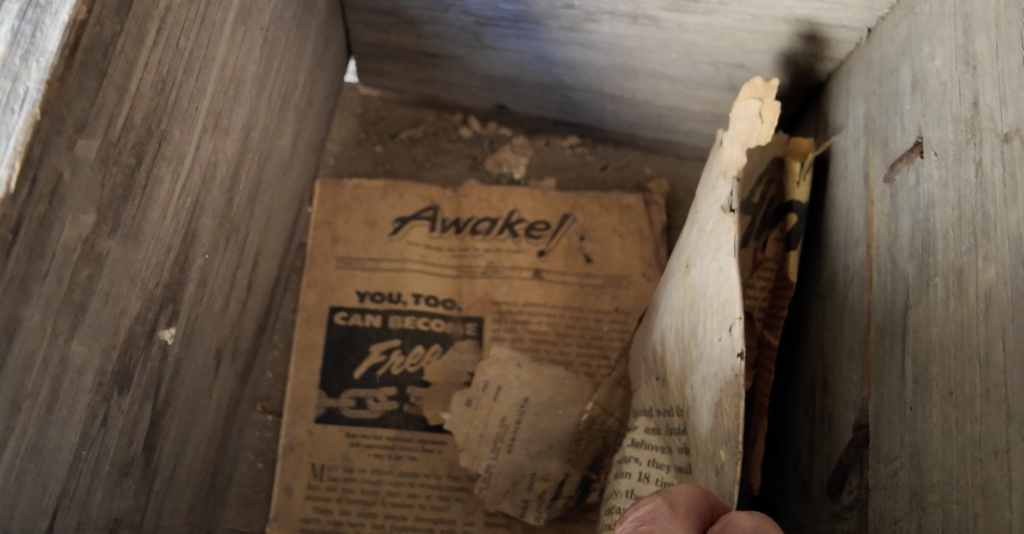
The Awake! Magazine that greeted me at the entrance to Marion’s mineshaft was not casual reading material. By February 1974, when that issue came off the press, the Jehovah’s Witnesses were in the grip of the most intense apocalyptic campaign in their modern history. Their leadership had been building toward a specific date for nearly a decade: 1975. Six thousand years after Adam’s creation, they taught, the seventh millennium would begin – and with it, Armageddon. Stadium banners thundered the slogan: Stay Alive to Seventy-Five.
In his journal, recovered years later, Marion left exactly one line about the magazines: “I’ve been reading the Watchtower magazine. Some interesting reading.”
That sentence refuses to testify. It could be faith. It could be curiosity. It could be paper that briefly became a thought before becoming tinder.
After first reading it, I set the magazine back in the box and stepped back into the canyon.
But the headline walked with me.
Following Him In
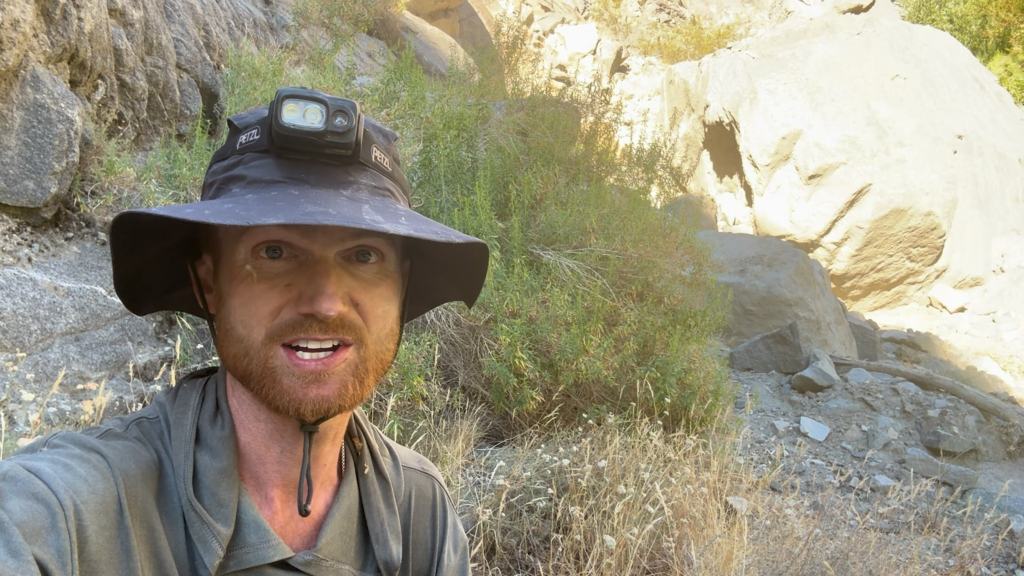
Understanding Marion’s story meant more than reading about it. It meant going back.
I wanted to trace his complete route – from his entry point on the Owens Valley side, over the high ridge, down through his camps, through the waterfalls, and all the way out the other side into Saline Valley. As far as I could tell, no one had done it in one continuous push since Marion himself. When Wendell Moyer had first encountered the Beekeeper, he had only gone up from the Saline side to Marion’s oasis in the canyon – only half the route. It took months of research – pouring over old USGS maps, Google Earth, and my best guesses based upon ridge lines and water flow. And eventually, I went back with four cameras, 300 feet of rope, and a plan I was fairly confident in.
The plan turned out to be wrong.
The route starts on a faint mining trail and quickly stops being a trail at all. Just before the 11,000-foot ridgeline at Mt. Inyo you find his first shelters – a mineshaft stocked with tools, then a rock overhang with a pot-bellied stove still inside, hauled piece by piece up a grade that makes your lungs burn just to look at. A memorial plaque for Moyer marks the spot. He died in December 1995, of altitude sickness on a 22,500-foot volcano in Chile. His friends carried the plaques in on foot and placed them along the trail. After months of research and aerial maps, finding it felt unreal.
Then you drop steeply into McElvoy, losing 2,000 feet in elevation in a half mile. And the canyon stops being a hike.
The canyon floor is an impenetrable wall of wild rose and thorn willow. In places it’s so dense you move by throwing your full body weight into it and hoping the thorns give up before you do.
It swallowed my GoPro so cleanly I didn’t notice until miles later. My drone took off on its own and disappeared into the brush. My Osmo camera drowned in a waterfall. By the end I was down to an iPhone, moving two miles in eight hours.
I rappelled eight major waterfalls, finding natural anchors for rope each time. The last was a 150-foot drop – the same ladder Marion built and called Jacob’s Ladder, water from the falls drenching me on the way down. By the time I crawled into camp on night two, soaked and wrecked, most of my optimism was gone.
That’s when it stopped being a physical challenge and became something else. A plain, unavoidable fact:
Marion did this. Every week. For twenty years.
The End of It
For Marion, 1975 and went. Armageddon didn’t arrive. In the years that followed, the Witnesses lost hundreds of thousands of members. Marion was in the canyon when the prophecy failed.
We don’t know what he made of it. But he stayed for another five years. Whatever the canyon had become for him by then, it was no longer preparation for an ending. It was something else.
Sometime around 1980, Marion left McElvoy Canyon for the last time. No explanation. No note. No farewell. Just the cabins slowly collapsing, the weathered hive stands still angled toward the morning sun, the discarded clothes, and the magazine in the wooden box by the straw bed.
He spent another decade and more roaming the Owens Valley – moving his trailer when BLM regulations required it, picking fruit in Oregon summers, scouring Highway 395 for cans and bottles. He carried his stovepipe the way other men carry photographs.
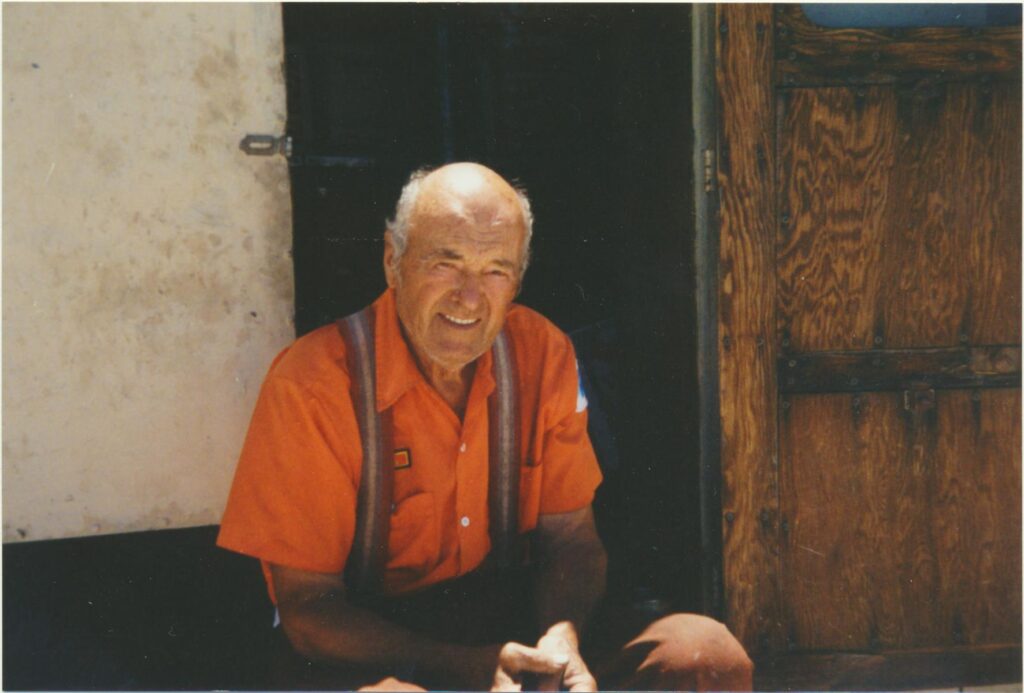
When Moyer finally tracked him down in 1994, Marion was 84 years old, living near Lone Pine out of a small round trailer, a stovepipe extending from its center. He collected his mail from General Delivery. He was, by Moyer’s account, a pleasant, open man, quite ready to talk.
Why had he left the canyon, after all those years?
“Got a pickup truck,” Marion said. “Pickup truck doesn’t climb mountains.”
He still had the same old yellow truck.
In his late eighties, Marion returned to the East Coast. On February 15, 2002, he died at the age of 92 and was buried in the family plot at Lowville Cemetery in Wattsburg, Pennsylvania – a small town near Lake Erie, not far from where he was born.
The man who had spent the middle of his life inside one of the most inaccessible canyons in America came home, in the end, to a small town near the lake he’d started from.
Why He Did It
The mystery of Marion Howard isn’t what happened. The record is clear enough on that. The mystery is why – and that question, it turns out, doesn’t have one answer.
Some people who’ve encountered this story see a man running toward something: peace, silence, a life finally sized to fit one person. In this reading the canyon wasn’t a hiding place. It was the only place quiet enough to finally hear himself think.
Others go straight to Iran. Not combat, but still war. Still a world where the ground beneath you couldn’t be trusted. This theory reframes his isolation not as self-protection but as protecting others – the canyon as a kind of quarantine for whatever he’d carried home from the railway.
And some see the Awake! magazine and think of the desert fathers – Anthony, the anchorites, the long lineage of people who stripped everything away to find out what was left. The canyon as monastery. The bees as prayer. The silence not an absence but a confrontation with the deepest question a person can ask.
None of these theories are wrong. None of them are complete. Marion Howard was not a man who resolved into certainty, and his story doesn’t either.
What I keep coming back to is simpler than any of them: he found a place that asked everything of him, and he kept showing up. Every week, over that ridge, down those ladders. Every spring, new bees on the same platforms. Every winter, pine boughs under his arms through the snowdrifts. Not because it was working. Because he’d decided it was his.
The Canyon Is Still There
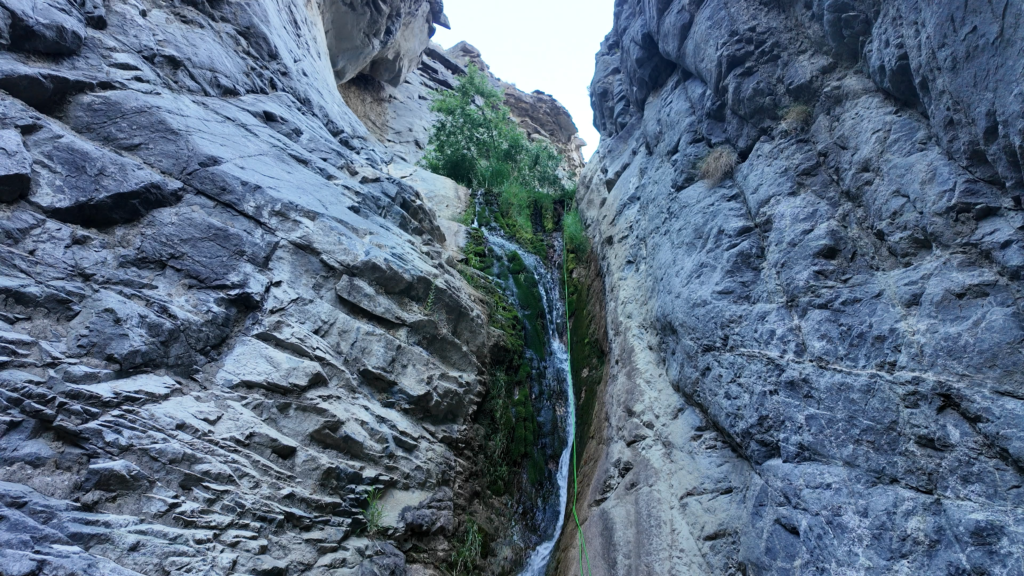
The ladders are long gone. The cabins are slowly returning to the rock they were built from. But McElvoy Canyon itself is unchanged – the same slot, the same waterfalls, the same brush that swallowed my cameras and tore the skin from my hands.
The Awake! magazine is still in the wooden box, as far as I know.
The core of it, what Marion Howard was actually looking for in that canyon, remains open. His own words are more careful than revealing. A man who spent twenty years making himself hard to find was not going to make himself easy to read. But I’ve come to think the question he was trying to answer is the same one that keeps pulling people toward stories like his – the same one that made millions of people who’d never heard his name find themselves unable to stop thinking about him once they had.
What does it cost to live the way you’re expected to live? What do you get back if you stop?
He paid it anyway. For twenty years, in a canyon where nothing was easy and the bees kept dying, he paid it.
You, too, can become free.
If you’re interested in my full journey into McElvoy Canyon, you can watch my video on retracing his route (and losing my cameras) HERE.
I am working on a full-length book about Marion Howard & McElvoy Canyon. To receive updates about that, sign up here!
More Photos from McElvoy Canyon